

In today’s competitive digital economy, businesses no longer want to spend money blindly on advertising. They want measurable results, real conversions, and maximum return on investment. This is exactly where performance marketing stands out from traditional marketing.
While traditional marketing focuses on brand visibility through offline channels like TV, newspapers, billboards, and radio, performance marketing focuses on measurable actions such as clicks, leads, sales, and app installs. Every rupee spent is tracked and optimized for results.
This guide explains how performance marketing is different from traditional marketing, why businesses are shifting toward digital performance marketing, and how brands can build a powerful performance marketing strategy for sustainable growth.
Table of Contents
ToggleWhat Is Performance Marketing?
Performance marketing is a data-driven digital advertising approach where advertisers pay only when a specific action is completed. These actions may include:
- Website clicks
- Lead form submissions
- Product purchases
- App downloads
- Email signups
- Unlike traditional ads where you pay upfront without guaranteed results, performance-based marketing ensures you only pay for measurable outcomes. This makes it one of the most cost-effective and scalable marketing models for startups, small businesses, and large enterprises
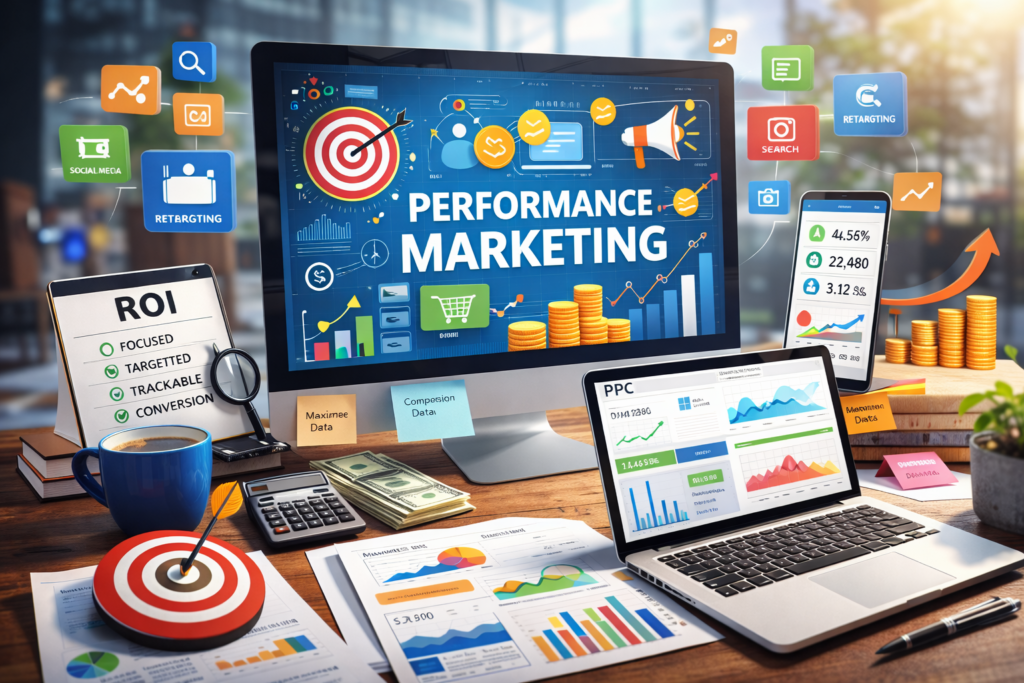
Common platforms used in digital performance marketing include:
- Google Ads
- Facebook & Instagram Ads
- LinkedIn Ads
- Affiliate marketing networks
- Native advertising platforms
What Is Traditional Marketing?
Traditional marketing refers to offline and mass-media advertising methods such as:
- Television commercials
- Newspaper and magazine ads
- Radio advertising
- Hoardings and billboards
- Flyers and pamphlets
These methods mainly focus on reaching a large audience and building brand awareness. However, measuring exact performance, customer engagement, and ROI is difficult. Businesses often spend a large budget without knowing how many customers actually converted.

Key Differences Between Performance Marketing and Traditional Marketing
Let’s understand the major differences clearly:
1.Measurability
Traditional marketing provides limited tracking. You cannot easily measure how many people saw a billboard or converted from a newspaper ad.
In contrast, performance marketing provides complete transparency. You can track impressions, clicks, conversions, cost per lead, and ROI in real time. This makes it ideal for ROI focused marketing.
- Cost Efficiency
Traditional advertising often requires high upfront investment. TV ads, print ads, and outdoor advertising can be expensive with no guaranteed return.
Performance-based marketing allows you to pay only for actual results. You can start with a small budget and scale based on performance. This ensures better budget control and profitability.
- Targeting Accuracy
Traditional marketing targets a broad audience with limited personalization.
Performance marketing allows advanced audience targeting based on:
- Location
- Age and gender
- Interests and behaviors
- Device usage
- Past website visitors
This precision targeting improves conversion rates and supports conversion driven marketing goals.
- Speed of Results
Traditional marketing takes time to show impact. Campaigns may run for weeks before any visible results appear.
Digital performance marketing can generate instant traffic, leads, and sales within hours of launching campaigns
- Optimization and Scalability
Traditional campaigns are difficult to modify once launched.
Performance marketing allows continuous optimization. You can change ads, budgets, targeting, and creatives instantly based on performance data. This flexibility helps brands grow faster.
Why Businesses Are Moving Toward Performance Marketing
The digital era demands accountability, transparency, and growth-focused advertising. Here’s why brands prefer performance marketing:
- Real-time tracking and reporting
- Better budget utilization
- Higher conversion rates
- Predictable ROI
- Data-driven decision making
- Faster scaling opportunities
Businesses investing in professional performance marketing services gain a competitive edge in online markets.
Popular Channels in Digital Performance Marketing
A strong performance marketing strategy uses multiple channels for maximum reach:
- Search Engine Advertising
Google Ads helps capture high-intent users actively searching for products or services.
- Social Media Advertising
Facebook, Instagram, and LinkedIn ads allow audience-based targeting and remarketing.
- Affiliate Marketing
Publishers promote your products and earn commissions based on conversions.
- Native Advertising
Ads blend naturally into content platforms for higher engagement.
- Retargeting Campaigns
Reconnect with visitors who previously interacted with your website.
Building a Winning Performance Marketing Strategy
- Define Clear Goals
Set measurable objectives like leads, sales, or app installs.
- Choose the Right Platforms
Select platforms where your target audience spends time.
- Create High-Converting Landing Pages
Your website should be optimized for user experience and conversions.
- Track Everything
Use tools like Google Analytics, Meta Pixel, and conversion tracking.
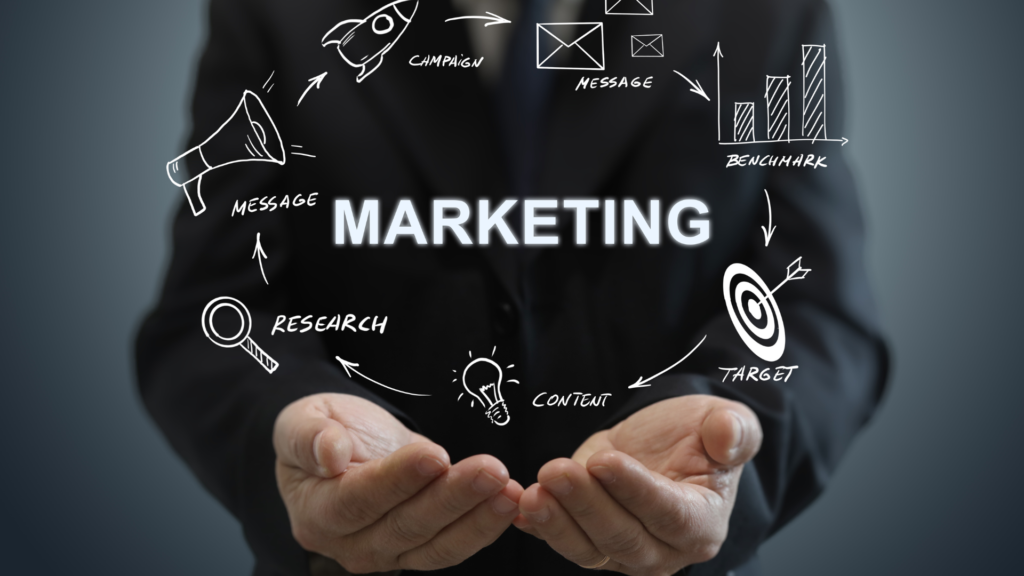
- Optimize Continuously
Pause low-performing ads and scale high-performing campaigns.
- Focus on ROI
Monitor cost per acquisition and lifetime value for sustainable growth.
Advantages of Performance Marketing Over Traditional Marketing
- ✔️ Transparent analytics
- ✔️ Flexible budget control
- ✔️ Highly targeted campaigns
- ✔️ Faster conversions
- ✔️ Strong scalability
- ✔️ Better customer insights
- ✔️ Supports ROI focused marketing
Limitations of Traditional Marketing
- ❌ Difficult ROI measurement
- ❌ High operational costs
- ❌ Limited targeting capabilities
- ❌ Slow feedback loop
❌ Minimal optimization flexibility
Future of Performance Marketing
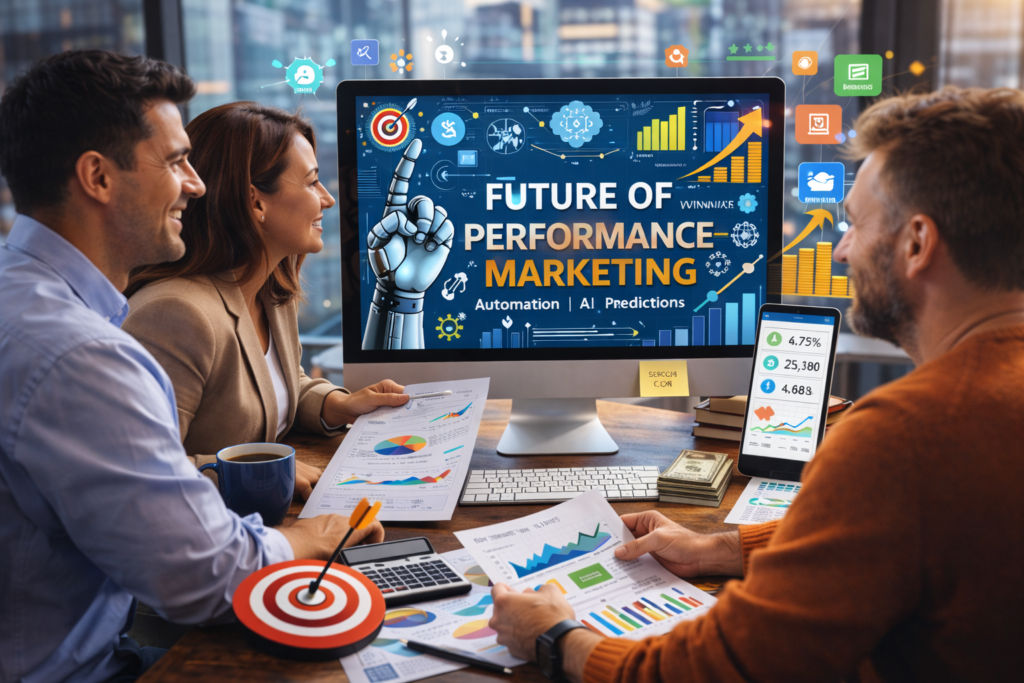
The future belongs to automation, AI-powered bidding, personalization, and predictive analytics. Businesses that invest in digital performance marketing and adopt data-driven advertising will dominate their industries.
Brands will increasingly rely on smart analytics, advanced attribution models, and integrated omnichannel strategies to maximize performance.
Conclusion
Performance marketing is revolutionizing how businesses advertise by focusing on measurable results, conversions, and ROI. Unlike traditional marketing, it provides transparency, control, flexibility, and scalability.
By implementing a strong performance marketing strategy, leveraging expert performance marketing services, and embracing performance-based marketing, businesses can achieve sustainable growth through conversion driven marketing and ROI focused marketing.
If you want faster growth, better conversions, and smarter advertising investments, performance marketing is the future of digital success.